
The psychology of pricing in professional services
How differentiated firms charge more, and why buyers let them
March 2026
Key sources: Akerlof (1970), Wolinsky (1983), Stiglitz (1987), Zeithaml (1988), Kirmani & Rao (2000), Hinterhuber (2004, 2008), Hinterhuber & Liozu / MIT Sloan (2012), Iyengar & Lepper (2000), Veblen (1899)
Increasing your prices by only 5% can yield roughly a 22% increase in operating profits. However, fewer than 15% of companies conduct systematic pricing research, which means the lion’s share of companies (85%) are leaving huge amounts of money on the table.
YOUR PRICE IS A STORY ABOUT YOUR QUALITY
The three most common forms of B2B pricing are: competition-based pricing (44% of firms), cost-based (37%) and, lastly, customer value-based pricing (17%). Regardless of the pricing model, the fact is that buyers use a combination of price, brand, and non-price signals to infer quality, reduce uncertainty, and justify their choices. In B2B markets, firms that build and credibly signal genuine differentiation are able to command higher and more resilient price premiums than those which anchor pricing decisions on costs or competitors. In other words, firms who stand out in the market are able to set prices which reflect their actual value; not just echo the perceived value of the whole market.
This report is a deep-dive into a wide range of trusted research, with the aim of proving that the more distinct your offering, perceived quality, and reputation are (in ways that matter to your buyer and are credibly signalled), the more you can and should charge.
The numbers that matter most
22%
increase in operating profit from a 5% increase in average selling price. Pricing is, by a significant margin, the most powerful profit lever available to most companies.
15%
of companies conduct systematic pricing research. The rest are guessing.
17%
of firms use value-based pricing. The majority still price based on cost (37%) or competition (44%).
86%
of B2B buyers perceive “no real difference” between suppliers. When every firm looks the same, price becomes the only available differentiator.
2%
of marketing journal articles have historically focused on pricing. The most powerful profit lever in business is also the most neglected.
44%
of firms still set prices based on what competitors charge. Another 37% price based on cost. Only 17% price based on the value they create for the buyer.
1. Why buyers use price to judge quality
1.1 The market for lemons
George Akerlof’s classic essay “Market for Lemons” explains how, when sellers know more about quality than buyers, low-quality producers are incentivised to masquerade as high-quality ones. Inevitably this leads to a lower average product quality and a collapse in prices, unless there are credible differentiators to segment the market with.
In professional services, this plays out through commoditisation. When all firms look, sound, and position themselves the same way, buyers default to price as the only available differentiator.
1.2 Price as quality signal
Asher Wolinsky formalised a model where prices serve as signals of product quality in markets with imperfect information; essentially, this means that market prices correspond to the quality level, so markups increase as product-specific information becomes poorer.
What that means for professional services companies is that when buyers can’t easily assess quality, they rely more heavily on price as a quality signal. Genuinely higher-quality firms can sustain higher markups as a result.
The research shows that when buyers infer quality from price, demand curves may no longer slope downward in the usual way: raising price can sometimes increase perceived quality and demand, especially for experience or credence goods.
For professional services, this means that overly low prices can backfire by signalling low quality or riskiness. Well-justified higher prices can reinforce perceptions of superior quality and reliability.
1.3 The credibility constraint
Amna Kirmani and Akshay Rao have proposed a signalling framework in which firms use price, advertising, and other marketing actions as signals of unobservable quality, subject to credibility constraints. Their research distinguishes between high-credibility signals (sustained advertising spend, generous warranties, visible selling effort) that are more costly for low-quality firms to mimic, and low-credibility signals (cheap claims) that are easily faked.
The implication? Pricing power isn’t a function of price level alone. It arises when premium prices are part of a coherent system of costly, consistent signals that together convince buyers the offering is genuinely distinct.
1.4 The buyer’s shortcut
More recently, Valerie Zeithaml’s synthesis of consumer perceptions of price, quality, and value reinforces this from the demand side. Her research defines perceived quality as a higher-order judgement about a product’s overall excellence, inferred from both intrinsic attributes (like performance or functionality) and extrinsic cues (like price, brand, and level of advertising).
When intrinsic attributes are difficult to evaluate (before purchase, under time pressure, or for complex products) buyers rely more heavily on extrinsic cues such as price and brand as generalised quality indicators. This is the default condition for professional services purchasing.
2. How differentiation translates into pricing power
2.1 The value equation
Zeithaml’s perceived value model says that buyers assess utility based on what is received (quality, benefits) versus what is given (price, time, effort, risk).
Quality isn’t an objective technical performance, but a global judgement often made within the buyer's frame of reference for relevant alternatives.
For professional services buyers, that frame of reference might be broader than expected. A company looking for strategic advice might weigh a management consultancy against a specialist boutique, a freelance advisor, or hiring someone in-house. Your uniqueness must be understood relative to that mental set, not just against firms that look like yours.
2.2 The misalignment trap
Morgan’s research demonstrated that managers and customers often measure quality against completely different criteria - what you're investing in isn't necessarily what your buyer values.
For example, you might emphasise credentials, team size, or years of experience, but your buyer might care about responsiveness, clarity of communication, or whether you understand their specific industry. Pricing power requires differentiation mapped to your customers’ value hierarchies, not your own assumptions about what matters.
Hinterhuber’s empirical work using Fortune 500 data shows that a 5% increase in average selling price yields roughly a 22% increase in EBIT, compared with much smaller effects from similar changes in volume or cost of goods sold.
Despite this leverage, fewer than 15% of companies conduct systematic pricing research and fewer than 2% of marketing journal articles have historically focused on pricing. Hinterhuber also documented widespread misconceptions among executives: they tend to overestimate customer price sensitivity, underestimate their ability to influence industry price structures, and default to cost- or competition-based pricing.
2.3 The economic value analysis
Hinterhuber’s framework defines a product’s economic value as the cost of the buyer’s best alternative and the monetised benefits and costs relative to that alternative (differentiation value).
Applied to professional services, the framework is straightforward. Your economic value is the cost of your buyer’s next best alternative plus the additional value you create that the alternative doesn’t. That additional value might be a faster turnaround, deeper sector expertise, a proprietary methodology, or a record in a specific type of work. When that differentiation value is real and the buyer can see it, they’ll pay for it.
Hinterhuber’s cross-industry analysis found that in multiple sectors, the most expensive provider is also the market share leader. This empirically refutes the assumption that high prices are incompatible with high market share. When differentiation is recognised and valued, premium positioning and leadership coexist. For professional services firms, the implication is direct: the question isn’t whether you can charge more, but whether you’ve given the buyer a reason to pay more.
Despite the theoretical and empirical advantages of value-based pricing, competition-based pricing remains dominant (average influence 44%), followed by cost-based (37%) with value based pricing a distant third, used in only 17% if cases.
Value-based pricing is positively correlated with success, whereas cost- and competition-based approaches are not. For professional services firms, this is the difference between pricing your advisory work based on what it costs you to deliver (your team’s time), what your competitors charge (hourly rate benchmarks), or what the work is worth to the buyer (the commercial outcome it enables). The third approach captures more value, but most firms default to the first two.
The Hinterhuber and Liozu MIT Sloan study proposed a “pricing capability grid” that categorises companies into zones based on price orientation and price realisation. Companies in the “pricing power zone” (value-based price setting with strong price realisation) enjoy materially higher price levels and profitability than firms in the “white flag zone” (weak in both dimensions). Based on interviews with 44 managers in industrial companies, the authors argued that pricing power is a learned organisational capability, not a fixed industry characteristic.
3. Choice architecture and the pricing psychology trap
When buyers face too many similar options, they get choice overload. When choice overload hits, they’re significantly less likely to buy. Iyengar and Lepper’s MIT Sloan study research participants that were offered extensive choice were one-tenth as likely to purchase as those offered limited choice.
For professional services firms, this plays out when you present a prospect with too many service tiers, package options, or scope configurations. The buyer’s cognitive load increases. Rather than evaluating your value, they simplify the decision by defaulting to the lowest price option, or they defer the decision entirely.
When evaluation is difficult, buyers default to extrinsic cues such as price and brand. If your service offering is too complex for the buyer to parse, you’ve inadvertently made headline price the dominant decision cue.
The MIT Sloan study emphasises the importance of “price getting” capabilities: clear discount rules, required approvals for deviations, target prices for negotiations, and monitoring systems.
In their field interviews, the authors documented cases where carefully set price premiums evaporated because people under pressure for volume heavily discounted. In professional services, this is the partner who discounts a proposal by 20% to close the deal, or the business development lead who bundles in extra scope for free. The premium you set on paper bears no resemblance to the price you actually realise.
Pricing power isn’t only about absolute price levels. It’s about how offers and prices are structured, how many options are presented, and how your organisation defends its value story in the field. Differentiated firms can increase their effective pricing power by simplifying choice around meaningful value tiers, anchoring perceptions with high-value “flagship” options, and enforcing disciplined discounting.
4. Reputation, status, and what price says about you
Veblen’s Theory of the Leisure Class introduced the concept of conspicuous consumption: purchases made not purely for utility but to display wealth, status, or taste. He identified “Veblen goods” for which higher prices increase demand because the price itself is part of the goods’ appeal.
Although Veblen focused on consumer elites, his insight generalises to organisational purchases. Senior managers often select suppliers whose brands and prices signal prudence, ambition, or alignment with a desired identity (“we partner with top-tier vendors”), especially for visible, career-relevant projects.
Stiglitz and others discussed how reputations for quality, fairness, or reliability can emerge in markets with imperfect information, and how firms may maintain high quality to protect these reputational rents, but certain signals (high advertising, quality warranties, visible investments) serve to build and maintain reputations that reassure buyers.
In B2B, choosing a highly reputed, premium-priced supplier can function as a form of risk insurance and internal signalling: the decision-maker can credibly claim to have chosen a “safe” option if challenged.
Hinterhuber’s case studies suggest that premium-priced industrial offerings often include relational and symbolic elements (dedicated support teams, co-innovation programmes, strategic partnership language) that go beyond functional attributes. These elements increase perceived value and justify higher prices by signalling long-term commitment. Higher prices reinforce the perception that the supplier is top-tier and that partnering with them says something positive about the buyer’s organisation.
These symbolic and reputational components are rarely quantified in traditional value analyses. Recognising and deliberately cultivating them (brand stature, reference customers, published expertise) can further enhance pricing power for differentiated B2B firms.
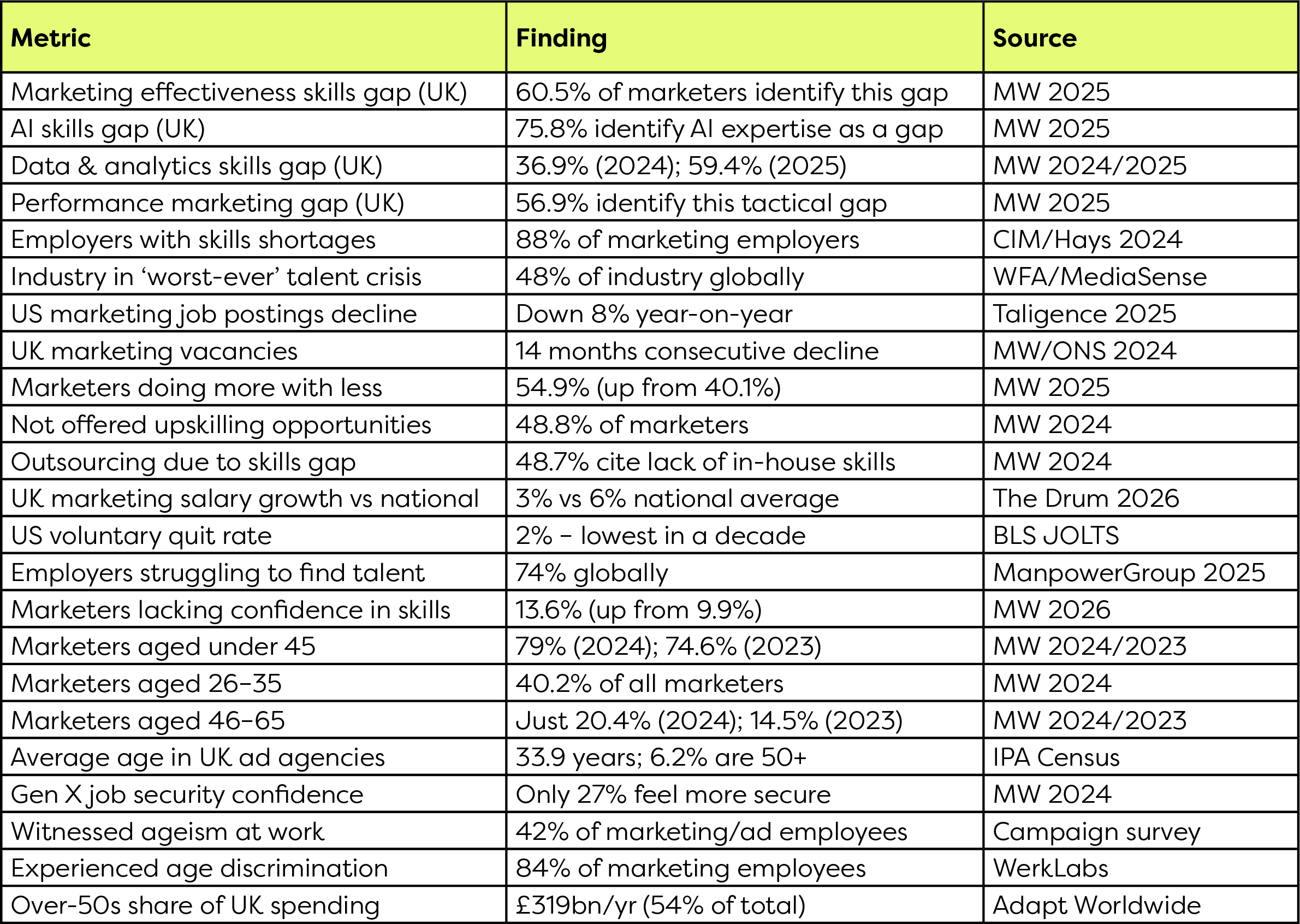
5. Key Statistics at a Glance
5. Why most firms leave pricing power on the table
If value-based pricing is more profitable, why do fewer than one in five firms use it?
Hinterhuber’s surveys and workshops reveal severe obstacles. Executives tend to overestimate customer price sensitivity, they struggle to quantify the value their offering creates, Sales teams default to discounting because their incentives reward volume, not margin, and most organisations lack senior sponsorship for pricing as a strategic function.
The result is predictable: companies set aspirational list prices aligned with differentiation, then watch those premiums erode through ad hoc discounts under volume pressure. Without governance and incentive alignment, a push for higher prices strains relationships with customers and sales teams while failing to deliver improved margins.
There’s also a measurement problem. Most of the experimental evidence on price-quality inference and choice overload is drawn from consumer markets. There’s relatively limited experimental work on B2B buyers under realistic conditions (multiple decision-makers, formal procurement, long-term contracts). Existing value-based pricing frameworks handle functional and economic benefits well but struggle to incorporate symbolic, reputational, and internal political value.
6. The risks of getting it wrong
Differentiation-based premium pricing isn’t risk-free. Four risks deserve attention.
First, in markets with formal tender processes, rigid procurement rules, or highly transparent price benchmarks, the room for premium pricing is structurally constrained. Deviations from prevailing prices are quickly disciplined by competitor responses and buyer switching. Attempts to charge substantially more may lead to exclusion from shortlists.
Second, the signalling effect of high prices can backfire. Stiglitz’s work on adverse selection shows that in some markets, higher prices attract worse risks. In B2B, aggressive premium pricing might concentrate your customer base among segments that are less sophisticated or more desperate, raising performance risk.
Third, if your governance is weak, you end up with list prices that signal “premium” but realised prices that are still “commodity.” This frustrates both customers and finance.
Fourth, signals must be credible over time. If you price at the top of the market but fail to deliver consistently superior outcomes, customers update their beliefs. The resulting reputational damage can reduce willingness to pay below what cost-based pricing might have achieved.
These risks don’t invalidate the central argument, but they define the boundary conditions. Differentiation-based premium pricing works when differentiation is real and valued by the buyer, when market structures allow buyers some discretion to trade off price and value, when your firm has built capabilities to assess, communicate, and defend its value proposition, and when signals (including price) remain credible over time through consistent delivery.
7. The price you’re not charging
The evidence across economics, marketing, and pricing practice consistently shows that in markets with imperfect information, price is more than a number. It’s a signal that, together with other cues, shapes how buyers perceive quality, risk, and value.
When a B2B firm creates genuine differentiation on dimensions that matter to customers (economic outcomes, reliability, relationship quality, reputation) and aligns its signalling and organisational capabilities accordingly, it can sustain higher prices and margins than cost- or competitor-focused rivals.
But differentiation alone isn’t enough. Pricing power emerges when differentiation is clearly understood and quantified, credibly signalled through coherent price, brand, and communication strategies, and defended through disciplined price realisation.
Where these conditions are absent, even superior offerings get dragged towards average market prices. Where they’re present, firms earn the right to charge more and, over time, shape the price structure of their industries.
8. Frequently Asked Questions
What’s the bottom line on pricing psychology for us?
Small, well-founded price increases have an outsized impact on profitability. Buyers use price and other cues to infer quality, risk, and value when direct evaluation is hard. If your offering is genuinely more valuable and you can make that value credible to buyers, you can often raise prices more than you think without proportionate volume loss.
How does differentiation-driven pricing change our competitive position?
When your offer is perceived as meaningfully different on dimensions buyers care about (and you signal that distinctiveness coherently through brand, communication, and price) you move out of pure price comparison into a frame where buyers compare you to a narrower set of high-end alternatives. In pharmaceuticals, industrial equipment, and other sectors, the most expensive product is often also the market share leader, because customers perceive it as uniquely valuable or safer.
Where should we invest to build pricing power?
The research points to three priorities. Customer insight and value quantification: building capabilities to perform economic value analyses by segment and scenario. Signal strength: investing in brand, references, advertising, and product form factors that make your uniqueness visible and credible. And pricing governance: creating dedicated pricing roles, rules for discounting, and sales training that align incentives with margin, not just volume.
What are the immediate risks if we push higher prices?
Short term, you risk internal resistance from sales teams who fear losing deals, and external pushback from customers if your value story isn’t clear or credible. If your governance is weak, list prices that signal “premium” will produce realised prices that are still “commodity.” There’s also structural risk in segments with rigid tender rules or highly transparent price benchmarks.
What can we realistically expect over 12–24 months?
Case evidence suggests that fully embedding value-based pricing takes several years. But measurable gains can appear within 12–24 months: modest but meaningful average price uplifts, reduced discount dispersion, and a shift in deal mix toward higher-value offers. You should expect growing organisational confidence in saying “no” to unprofitable deals and the beginnings of a culture where differentiation and pricing are consciously linked.
We’re in professional services. Does this apply to us?
More than most. Professional services are the textbook case for information asymmetry: your buyer can’t evaluate quality before purchase, the stakes are high, and the personal risk of a bad buying decision is real. Every finding in this research (that buyers use price to infer quality, that credible signals reduce price sensitivity, that differentiated firms sustain higher margins) applies with greater force in professional services than in product markets.
9. Source index
Akerlof, G.A. (1970), “The Market for ‘Lemons’: Quality Uncertainty and the Market Mechanism,” Quarterly Journal of Economics, 84, pp. 488–500.
Wolinsky, A. (1983), “Prices as Signals of Product Quality,” Review of Economic Studies, 50, pp. 647–658.
Stiglitz, J.E. (1987), “The Causes and Consequences of the Dependence of Quality on Price,” Journal of Economic Literature, 25, pp. 1–48.
Kirmani, A. & Rao, A.K. (2000), “No Pain, No Gain: A Critical Review of the Literature on Signaling,” Journal of Marketing, 64, pp. 66–79.
Zeithaml, V.A. (1988), “Consumer Perceptions of Price, Quality, and Value,” Journal of Marketing, 52, pp. 2–22.
Hinterhuber, A. (2004), “Towards Value-Based Pricing: An Integrative Framework for Decision Making,” Industrial Marketing Management, 33, pp. 765–778.
Hinterhuber, A. (2008), “Customer Value-Based Pricing Strategies: Why Companies Resist,” Journal of Business Strategy, 29(4), pp. 41–50.
Hinterhuber, A. & Liozu, S. (2012), “Is It Time to Rethink Your Pricing Strategy?” MIT Sloan Management Review, 53(4), pp. 69–77.
Morgan, N.A. / General Electric, appliance quality perceptions study, summarised in Zeithaml (1988).
Ingenbleek, P. et al. (2003), “Successful New Product Pricing Practices: A Contingency Approach,” Marketing Letters, 14(4), pp. 289–305.
Iyengar, S.S. & Lepper, M.R. (2000), “When Choice Is Demotivating,” Journal of Personality and Social Psychology, 79(6), pp. 995–1006.
Veblen, T. (1899), The Theory of the Leisure Class, esp. chs. 4–7.
Spence, M. (1973), Market Signaling: Informational Transfer in Hiring and Related Screening Processes, Harvard University Press.
SOBA: PRIVATE LABEL
Soba: Private Label helps B2B brands break free from a sea of sameness. The agency combines human-first creativity with audacious positioning, crafting campaigns and messaging that are mischievous, memorable, and impossible to ignore.
Rejecting conventional agency rules, Soba never works with a client for more than 12 weeks, delivering bold strategy, clever storytelling, and distinctive brand personality.
About the author
Storm is Soba’s Managing Director.
Their copy and campaigns have marketed cybersecurity products to Fortune 500 companies and governments, newspaper advertising packages to SMEs, and conversational AI solutions to the world’s biggest BPOs, among many other things.
They have more than a decade in the trenches, where they’ve managed and built teams and marketed international products across APAC, North America and EMEA.
Storm firmly believes in three things: that B2B marketing doesn’t need to be boring; copywriting should sell; and that even numbers are superior to odd ones.
Contact
Email: Storm@soba.agency
SOBA: PRIVATE LABEL
Soba: Private Label helps B2B brands break free from a sea of sameness. The agency combines human-first creativity with audacious positioning, crafting campaigns and messaging that are mischievous, memorable, and impossible to ignore.
Rejecting conventional agency rules, Soba never works with a client for more than 12 weeks, delivering bold strategy, clever storytelling, and distinctive brand personality.
About the author
Storm is Soba’s Managing Director.
Their copy and campaigns have marketed cybersecurity products to Fortune 500 companies and governments, newspaper advertising packages to SMEs, and conversational AI solutions to the world’s biggest BPOs, among many other things.
They have more than a decade in the trenches, where they’ve managed and built teams and marketed international products across APAC, North America and EMEA.
Storm firmly believes in three things: that B2B marketing doesn’t need to be boring; copywriting should sell; and that even numbers are superior to odd ones.
Contact
Email: Storm@soba.agency